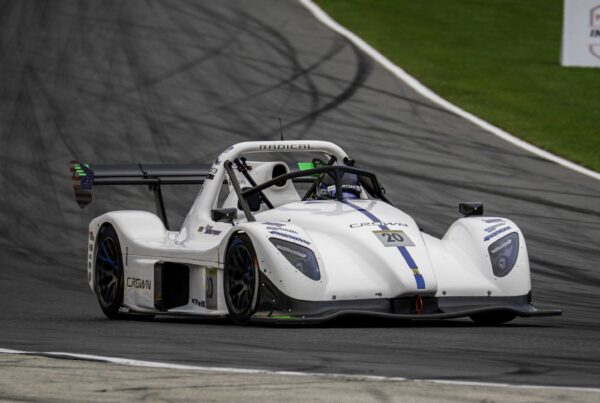
Radical Cup Road Atlanta 2026 was a weekend that made every lap count. Qualifying was abandoned, the first two races ran in wet conditions, and the final race required a complete reset to a dry setup. Crown Racing arrived at Michelin Raceway Road Atlanta with two cars and two distinct programs: Ryan George in the No. 20 Radical SR3 XXR 1340, and Josh Holtz in the No. 7 Radical SR3 XXR 1500.
The July 23 through 25 round did not deliver the results the team wanted. It did provide a demanding test of preparation, communication, and driver development at one of North America’s fastest and least forgiving road courses.
A Radical Cup Weekend Controlled by the Weather
Michelin Raceway Road Atlanta packs 12 turns into 2.54 miles. Its elevation changes, high-speed commitment, blind approaches, and limited margin for error already place a premium on confidence and precision. Add water, changing grip, and an interrupted schedule, and the work expands well beyond finding a conventional dry-weather setup.
For Crown, the central challenge was giving both drivers a car they could read as the circuit changed. The No. 20 and No. 7 were not identical programs. Ryan was competing in Pro 1340, while Josh was in Pro 1500. Each driver needed feedback, data review, and setup decisions appropriate to his car and experience.
The team’s race records show wet tires for Races 1 and 2, followed by a return to a dry setup for Race 3. That sequence demanded three things repeatedly: establish what the track was giving, communicate what the car was doing, then make the next decision without the luxury of unlimited running.
Qualifying Abandoned, Preparation Compressed
Qualifying was abandoned, removing the session that normally helps a team confirm balance, build driver rhythm, and establish the grid on outright pace. That changed the character of the weekend before racing began.
When a session disappears, the missing laps cannot be recovered. The driver has fewer opportunities to establish references. The engineers have less data for comparison. The crew has less direct evidence before committing to the next setup. The correct response is not to chase certainty that no longer exists. It is to identify the clearest available information and make disciplined decisions from it.
That became Crown’s operating reality for all three races.
Race 1: Learning in the Wet
Race 1 put both Crown cars on wet tires. Ryan completed 20 laps in the No. 20 and was classified fourth in Pro 1340, 18th overall. Josh completed 19 laps in the No. 7 and placed sixth in Pro 1500, 20th overall.
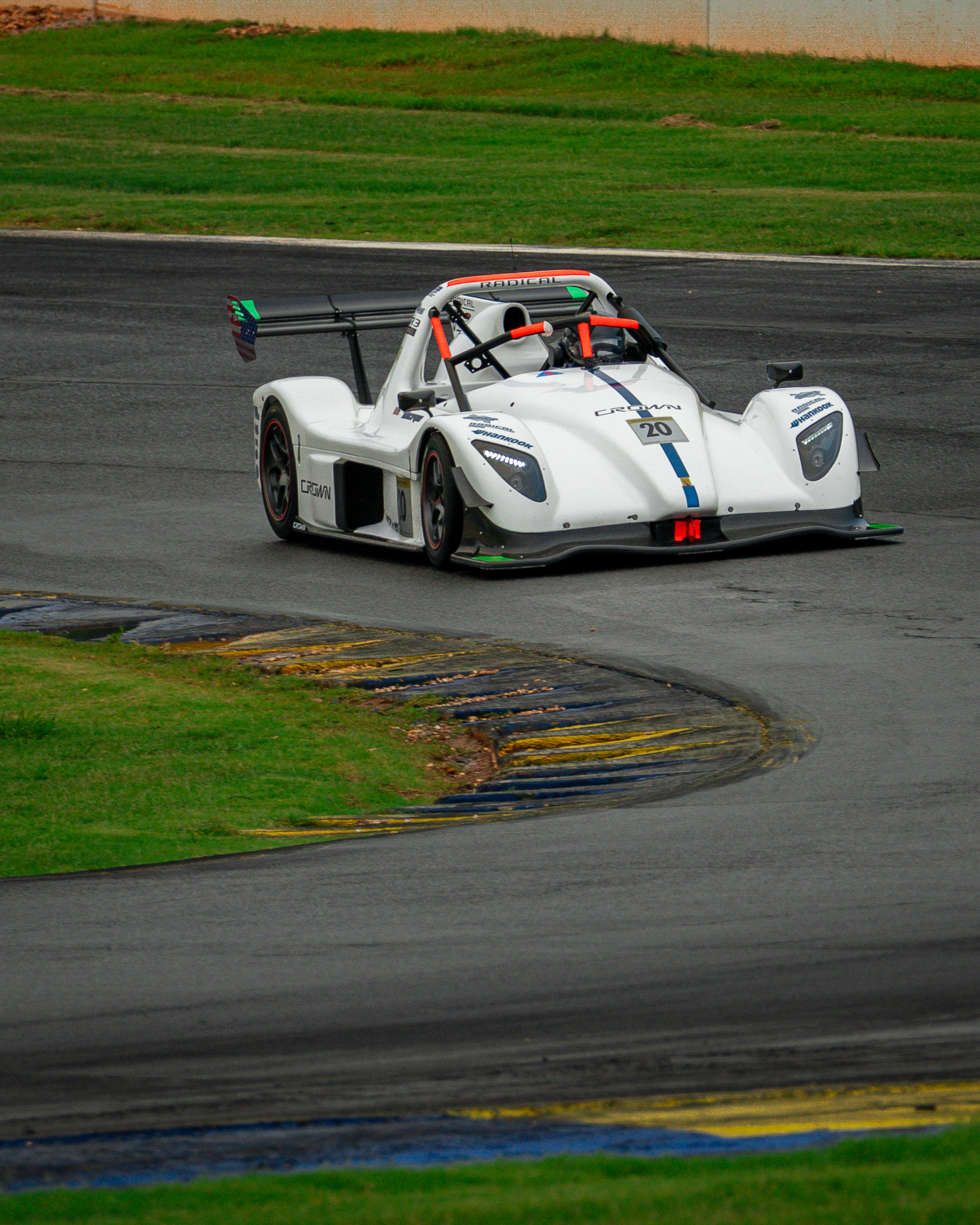
For Ryan, the result established a consistent class position on a weekend with little conventional preparation. More importantly, it gave the developing No. 20 program a full race of information at a circuit where wet grip can change corner by corner.
Josh’s opening race provided a similar baseline in the more powerful Pro 1500 class. The No. 7’s pace and balance could now be evaluated over a meaningful run rather than a handful of disconnected laps.
Race 2: Another Moving Target
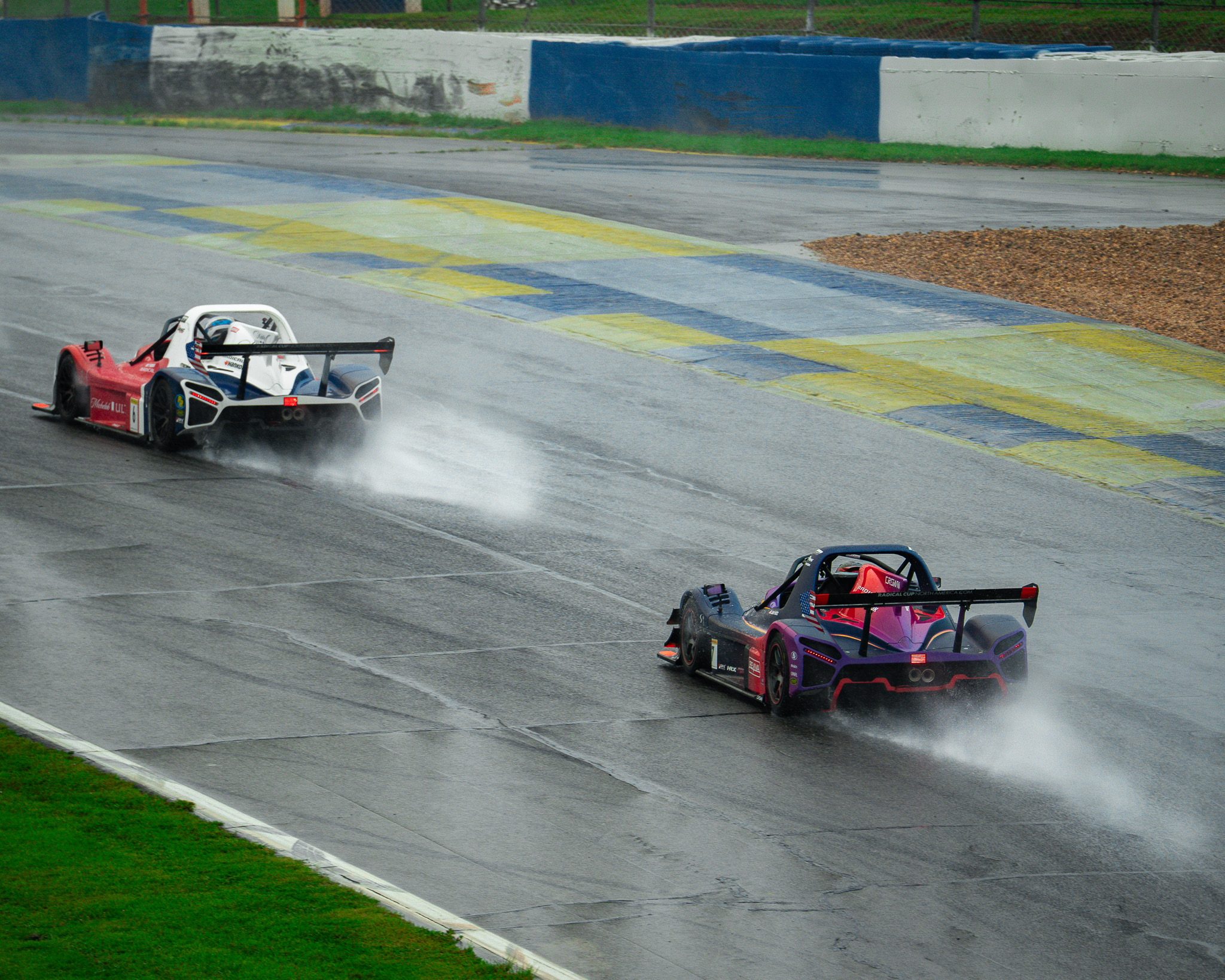
The wet tires stayed on for Race 2, but the first race did not make the second one predictable. A wet circuit is a moving target. Standing water shifts, rubbered-in sections behave differently, and a line that works early can lose grip as conditions evolve.
Ryan completed 16 laps and again finished fourth in Pro 1340, improving to 14th overall. Josh was classified fifth in Pro 1500 and 16th overall after 14 laps. The class result represented one-position progress for the No. 7 from Race 1.
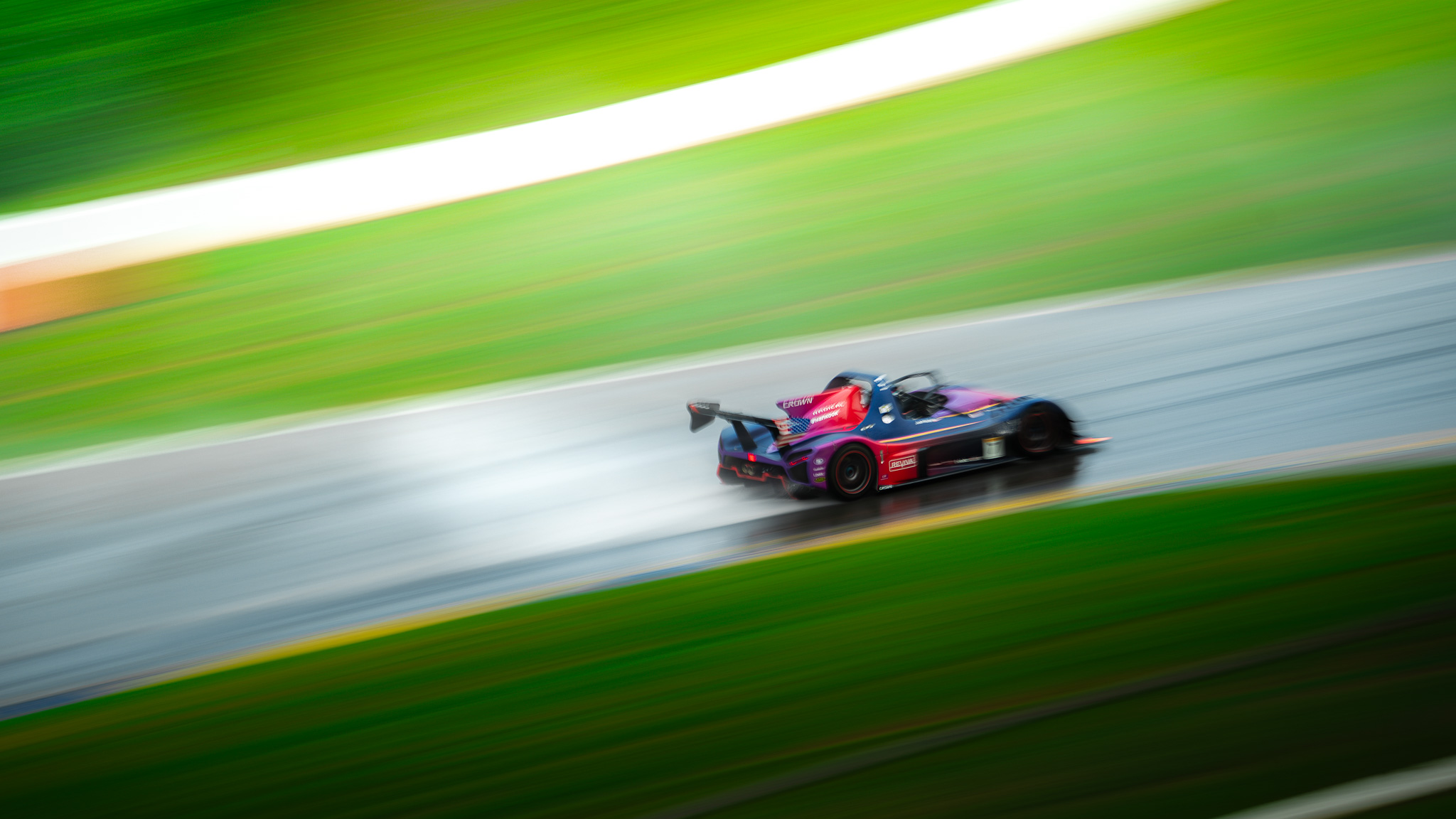
The visible spray told only part of the story. Inside the car, the driver had to manage reduced visibility, altered braking references, traction, traffic, and the changing line. On the pit wall, Crown’s job was to separate useful driver feedback from conditions that might change before the next run.
Race 3: A Dry Reset
Race 3 moved the program back to a dry setup. That was not a small adjustment. The references, braking confidence, tire behavior, and balance targets built during two wet races had to be recalibrated for a faster circuit.
Ryan completed 20 laps and secured a third consecutive fourth-place result in Pro 1340, finishing 15th overall. The consistency mattered. Across wet and dry conditions, the No. 20 held the same class position and completed 56 race laps over the weekend.
Josh completed five laps and was officially classified seventh in Pro 1500, 21st overall. The official timing report does not state why the No. 7’s race was shortened, so Crown is not assigning a public explanation that the record cannot support. The result stands as a difficult end to a demanding round.
Crown’s Official Radical Cup Road Atlanta 2026 Results
Ryan George, No. 20, Pro 1340
- Race 1: 4th in class, 18th overall, 20 laps
- Race 2: 4th in class, 14th overall, 16 laps
- Race 3: 4th in class, 15th overall, 20 laps
Josh Holtz, No. 7, Pro 1500
- Race 1: 6th in class, 20th overall, 19 laps
- Race 2: 5th in class, 16th overall, 14 laps
- Race 3: 7th in class, 21st overall, 5 laps
Results are drawn from the official USAC timing reports for Race 1, Race 2, and Race 3.
What Crown Takes Forward
A race recap should not turn a hard weekend into a false victory. Crown did not leave Road Atlanta with podiums. The team left with a clearer picture of both driver programs, wet and dry race data, and a list of work to carry into the next event.
Ryan’s three fourth-place Pro 1340 finishes showed repeatability across changing conditions. The next step is converting that consistency into forward class progress. Josh improved from sixth to fifth in the two wet races, then lost the chance to build a comparable dry-race result when Race 3 ended after five laps. For the No. 7 program, the value is in reviewing the complete weekend honestly and addressing what limited the result.
That is the work behind customer racing. The car must be prepared, but the program also has to develop the driver, interpret the data, manage changing conditions, and respond when the weekend refuses to follow the plan.