That sounds exciting because it is. It is also slightly terrifying, because at some point the abstract idea of “getting into racing” turns into real logistics: buying the car, understanding maintenance intervals, sourcing safety equipment, coordinating storage and transport, scheduling track support, and asking yourself a very uncomfortable question: “Am I actually capable of driving this thing?”
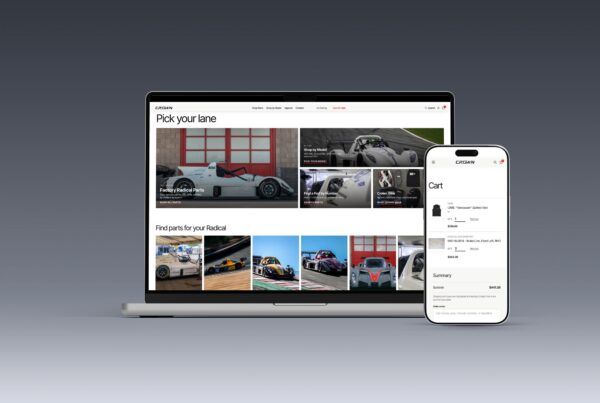
The difference, in my case, was that Crown made most of those variables turnkey. Instead of trying to solve each piece separately, I was able to work through the car, gear, preparation, support, orientation, and next steps with one team that understood the entire path.
Why the Radical SR3 XXR 1340 Became the Focus
By this point, I had become fairly convinced that the Radical ecosystem aligned well with my actual goals. I was not trying to become a Formula One driver. I was trying to become a competent, confident performance driver while building toward regular participation in serious motorsport in a way that was sustainable, educational, and genuinely fun.
The Radical platform checked a surprising number of boxes: real aerodynamic grip, lightweight race-car dynamics, a sequential gearbox, large grids, manufacturer support, a repairable chassis, strong resale, and a realistic path toward wheel-to-wheel racing. The bigger question became which Radical made the most sense.
The SR1 is an excellent car and probably underappreciated, especially as a pure learning tool. But in the United States, the SR3 has more gravity around it: bigger grids, broader support, deeper setup knowledge, and a clearer progression path. Like the Rush SR, the Radical SR1 remained tempting due to one-time and operating costs, but I felt far enough along in the journey that I would likely outgrow it quickly. It did not make sense to buy something I might immediately want to upgrade.
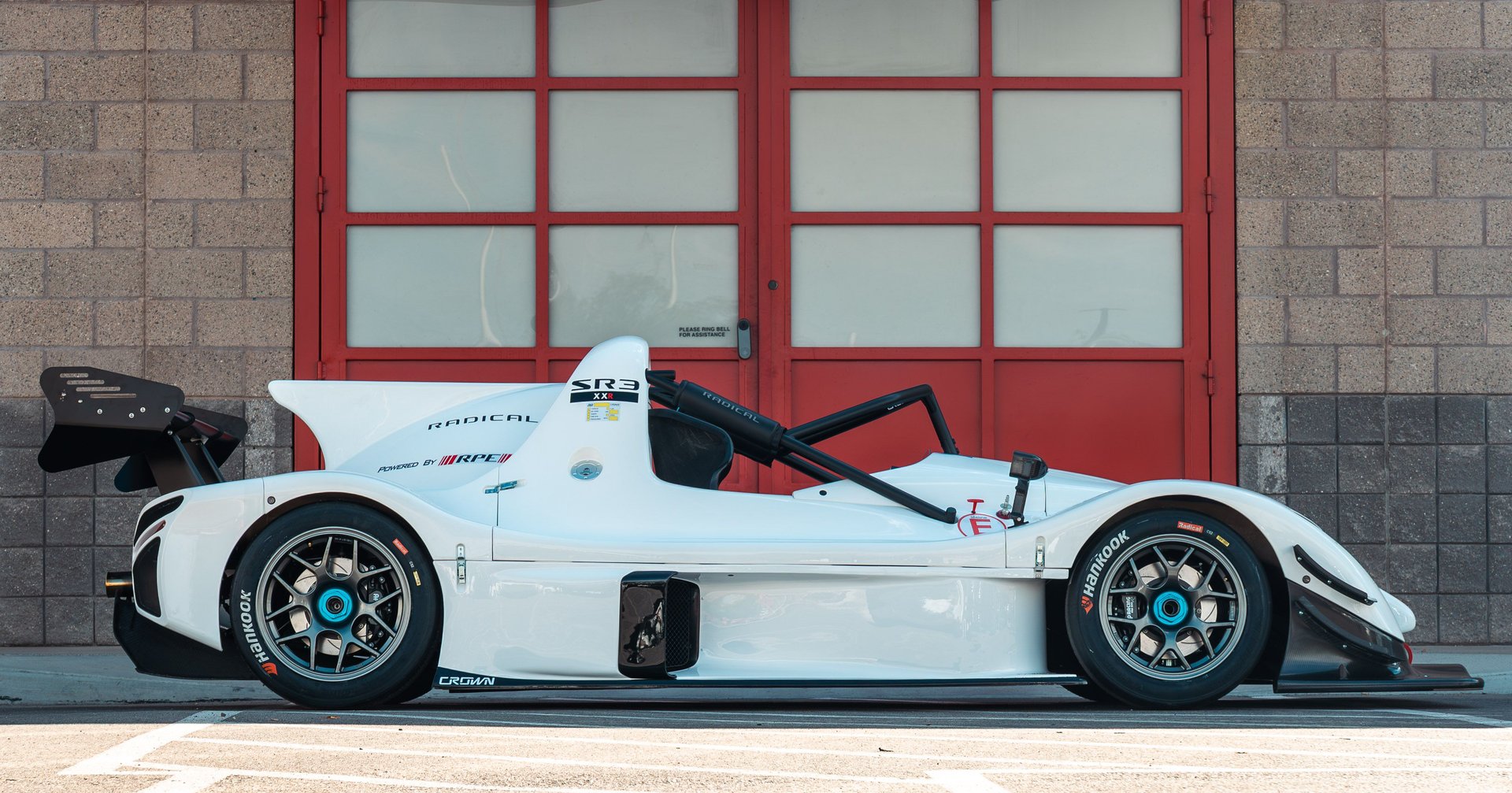
That is why the Radical SR3 XXR became the center of the conversation. Radical describes the SR3 XXR as the world’s best-selling race car, and the platform gave me the best combination of serious performance, support, and progression potential.
Why the Radical SR3 XXR 1340 Instead of the 1500?
This decision took more thought than I expected. On paper, the 1500 is objectively faster. More power. More torque. More top-end performance. And if I am being honest, there is always part of your brain that says, “If I am doing this, shouldn’t I just buy the bigger engine?”
But the more experienced drivers and coaches I spoke with kept steering me toward the same idea: the best learning car is rarely the most intimidating one.
The 1340 still delivers roughly 200 horsepower in an extraordinarily light, high-downforce chassis. It is already much faster than most people can fully exploit. More importantly, it rewards momentum, precision, smoothness, and commitment rather than allowing power to compensate for mistakes. That sounded like the better educational tool.
There was also something psychologically important about knowing the car was slightly less aggressive. I wanted a platform that encouraged confidence and repetition rather than constantly reminding me I was in over my head. I suspect many adult newcomers wrestle with this tension: buying the “ultimate” version versus buying the version they are most likely to actually learn in. Eventually, I accepted that the goal was not to impress anyone. The goal was to improve.
Why Not the SR10?
The Radical SR10 XXR fascinated me immediately. The turbocharged power delivery, broader torque curve, endurance-racing parallels, and sheer visual aggression are enormously appealing. In many ways, it feels like the closest thing to a mini endurance prototype.
But once again, honesty mattered. The SR10 is significantly faster, heavier, and more physically demanding. It introduces another layer of complexity through turbocharged torque delivery and additional operating costs. At some point, I realized I was trying to skip steps. The smarter move was to build foundational habits in the lighter, simpler, naturally aspirated car first.
Ironically, the deeper I got into motorsport, the more respect I developed for progression itself. That is where the Radical SR3 XXR 1340 made the most sense.
Why I Bought a New Radical SR3 XXR 1340
Like most buyers entering motorsport, I initially assumed buying used was obviously the smarter financial decision. And to be clear, there are a lot of very good, very low-hour used Radical SR3s available. For many drivers, that may be the perfect answer.
But I have always been someone who likes new things when possible. Not simply because they are shiny or untouched, but because I like knowing the history. More accurately, I like being the history. With a new car, there is no guessing about prior incidents, maintenance habits, engine hours, setup decisions, or how hard the car was used before I ever sat in it.
For an experienced racer, those unknowns may be manageable. For a first-time race car owner, they added a layer of uncertainty I did not need. What ultimately pushed me toward a brand-new Radical SR3 XXR 1340 center-seat car was not just the car itself. It was the confidence that came with starting from zero: known history, current-spec updates, support, setup guidance, parts availability, coaching, and reduced uncertainty.
I realized I did not just want a race car. I wanted confidence.
What Radical SR3 XXR 1340 Ownership Actually Looks Like
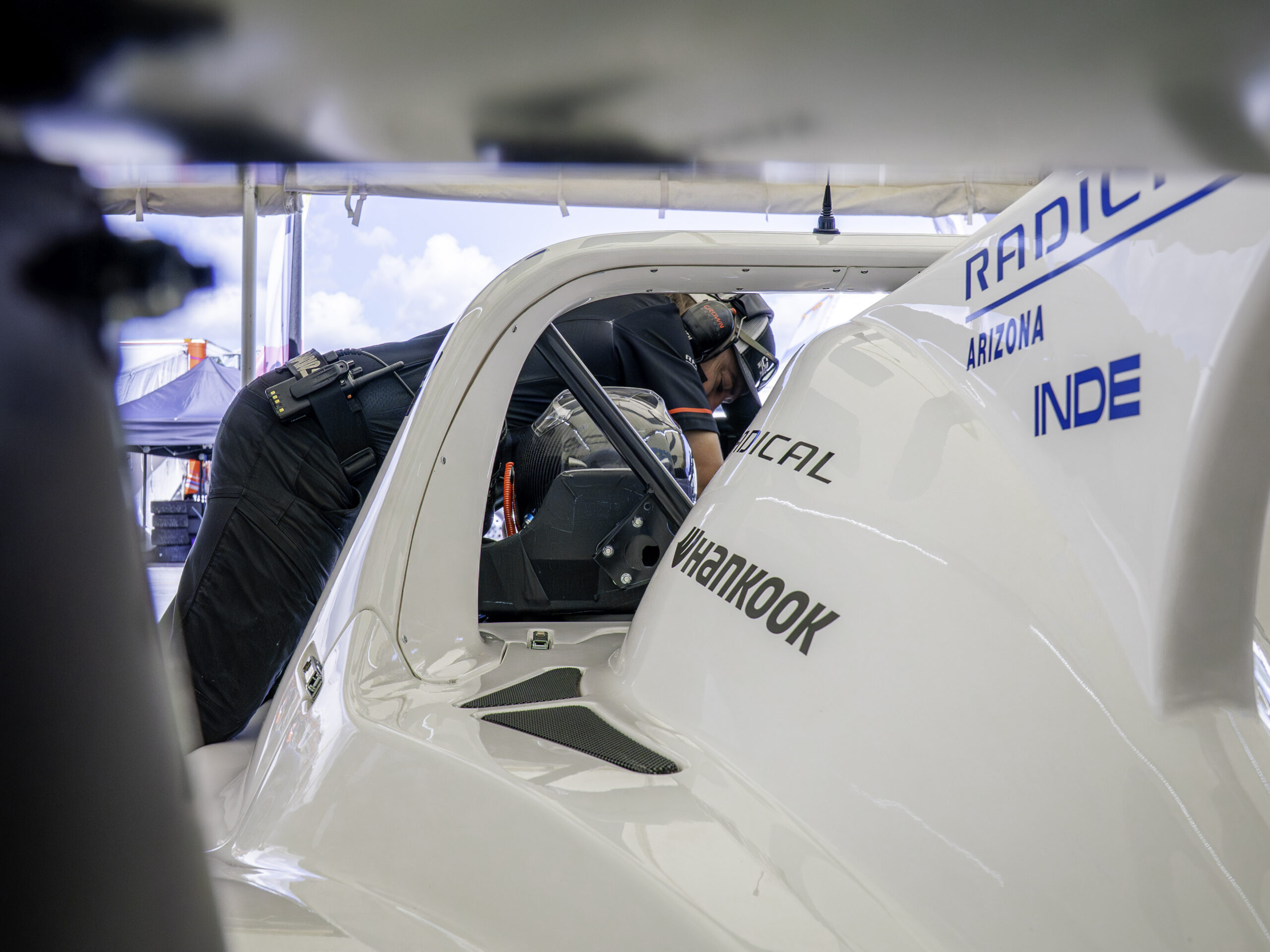
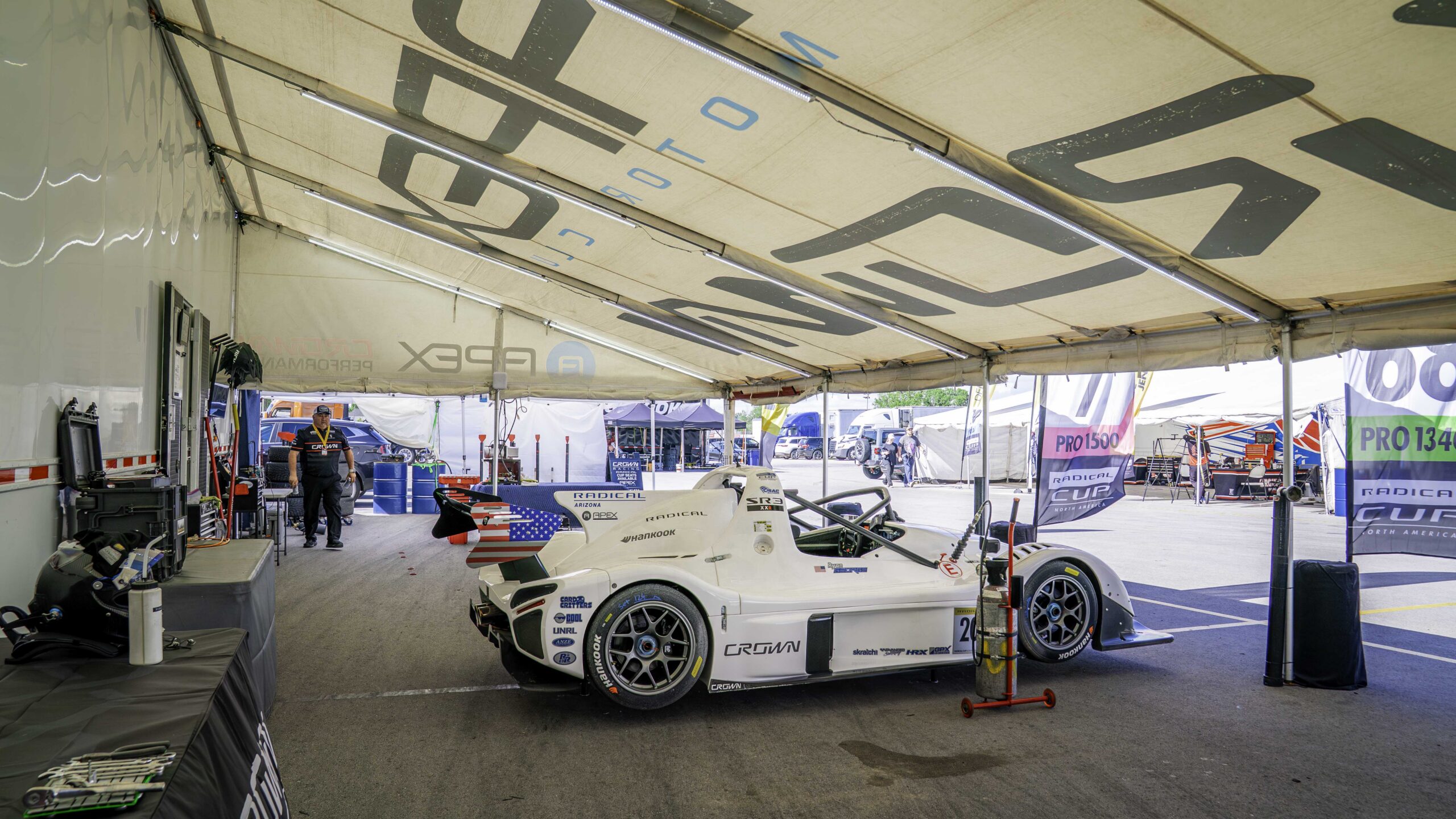
Before entering motorsport, I imagined ownership mostly in terms of driving. In reality, a huge percentage of race-car ownership is operational: trailer fitment, storage, tire management, warm-up procedures, battery maintenance, fuel handling, data review, camera systems, radios, loading ramps, spares, alignment settings, brake wear, weather, and track support.
That was not discouraging. Honestly, it was part of the appeal. But it reinforced how important support and mentorship really are for first-time owners.
The first time I properly sat in the SR3 with belts tightened, steering wheel attached, visibility adjusted, and seating position finalized, the experience became very real very quickly. The car stopped feeling like a cool object and started feeling like a machine that demanded competence. Everything was purposeful: the custom poured seating position, the visibility, the custom pedal assembly, the steering effort, the sequential gearbox, the noise, the vibration.
Nothing about it felt casual. And yet, after the initial intimidation faded, something surprising happened. It also felt manageable.
Not easy. Not safe. Not forgiving. Manageable.
The more I learned, the more I realized that race cars become intimidating primarily when approached without structure, instruction, or progression.
HPDE Orientation Days
One of the smartest parts of the process was completing dedicated HPDE orientation days before attempting anything remotely competitive. Those sessions taught me things no article or YouTube video realistically can: startup procedures, warm-up discipline, cooldown habits, sequential gearbox rhythm, pit procedures, mirror use, traffic management, and how quickly a lightweight aero car processes inputs.
The orientation days also reduced fear significantly. By the end of those sessions, the car no longer felt like an exotic object I was trying not to damage. It began feeling like a tool I was slowly learning to use properly.
That mental shift matters enormously.
I think many people imagine race-car ownership as a constant adrenaline rush. In reality, good ownership looks surprisingly disciplined: preparation, maintenance, repetition, debriefing, data review, gradual progression, and building confidence honestly. The driving is the reward, but the structure around the driving is what allows improvement to happen safely and consistently.
And in many ways, that is what this entire series is really about. Not pretending to be a professional driver. Not skipping steps. Not chasing internet fantasy. Just learning the sport properly, one thoughtful progression at a time.
What Came Next
Eventually, after the schools, the orientation days, and the growing comfort inside the SR3, there was only one thing left to do: go racing.
That experience, arriving at Inde Motorsports Ranch, completing the orientation and evaluation process, lining up for my first wheel-to-wheel start, and discovering both my fears and capabilities in real time, will be the focus of the next article in this series:
“My First Wheel-to-Wheel Race: From Zero Experience to the Podium at Inde.”
Because, as I am continuing to learn, racing is not really about becoming fearless. It is about becoming competent enough that fear stops making your decisions for you.
Radical SR3 XXR 1340 FAQ
Is the Radical SR3 XXR 1340 a good first race car?
The Radical SR3 XXR 1340 can be a strong first race car for a driver who wants serious prototype-style performance with structure, coaching, and proper support.
Why choose the Radical SR3 XXR 1340 instead of a faster car?
The Radical SR3 XXR 1340 makes sense because it rewards momentum, precision, smoothness, and repetition instead of simply using more power to cover mistakes.
What matters most when buying a Radical SR3 XXR 1340?
The most important pieces are car fitment, safety equipment, setup guidance, maintenance planning, trackside support, coaching, and a realistic progression plan.