Going to racing school before buying a race car was not the only way I could have entered motorsport. I could have bought a fast street car, attended a few HPDE events, and gradually built experience through trial and error. Plenty of capable drivers start that way.
But I recognized something about myself fairly early: I did not just want seat time. I wanted foundational understanding.
I wanted to know what the car was doing underneath me and why. I wanted to learn vision, weight transfer, threshold braking, trail braking, smoothness, vehicle balance, and situational awareness before random experimentation turned into ingrained habits. That realization pushed me toward formal instruction and, eventually, toward a much clearer plan for buying my first race car.
Why I Chose Racing School Before Buying a Race Car
After researching several options, I landed on Radford Racing School. Proximity to Arizona mattered. Scheduling flexibility mattered. Its reputation mattered. What really drew me in, however, was the ability to experience both GT-style and Formula-style instruction within the same environment.
I ultimately completed Radford’s 4-Day GT Road Racing program, followed by the 2-Day Formula 4 Intro Course. That combination turned out to be incredibly valuable, although not entirely in the way I originally expected.
I arrived thinking instruction would mostly be about technique: braking points, turn-in, apexes, and throttle application. It was about those things, but the larger lesson was how much discipline performance driving requires. Formal instruction exposed the gap between making a car move quickly and understanding how to repeat that performance with awareness, consistency, and control.
What the 4-Day GT Road Racing Program Taught Me
The GT program stripped away misconceptions almost immediately. Nobody cared about ego. Nobody cared about lap times on Day One. The instructors cared about consistency, awareness, smoothness, and building good habits.
That reset mattered. It is easy to imagine performance driving as a contest of bravery, reaction time, or aggression. In practice, forcing the car usually creates more work. Abrupt steering asks too much of the front tires. Poor vision compresses the time available to make a decision. Rushed braking unsettles the platform. A driver who is trying to attack every input can be slower and less predictable than one who is calm, deliberate, and looking far enough ahead.
The school gave each skill a place in a larger system. Vision affected timing. Timing affected smoothness. Smoothness affected balance. Balance determined how much grip was available for braking, cornering, or acceleration. Once those connections started to make sense, the car stopped feeling like a collection of unrelated reactions.
What surprised me most was how mentally demanding performance driving actually is. At speed, your brain is processing flag stations, mirrors, traffic, braking references, corner geometry, tire feedback, instructor direction, and the car’s balance at the same time. You are doing all of that while trying not to overload the car or yourself.
Initially, it feels impossible.
Learning How the Brain Adapts at Speed
Then, slowly, your brain begins adapting. Your vision moves farther ahead naturally. Your hands calm down. Your steering inputs become smoother. You stop trying to attack the car and begin working with it instead.
That process was one of the most reassuring parts of racing school. It showed me that improvement did not require pretending fear or uncertainty had disappeared. It required giving my brain enough structured repetition to recognize what mattered, filter out noise, and make better decisions sooner.
Formal instruction also helped me discover what felt natural and what did not. Threshold braking at speed intimidated me. Carrying minimum speed into faster corners required trust I had not developed yet. Situational awareness, smooth steering inputs, and processing instructor feedback felt surprisingly intuitive.
That self-awareness changed the internal narrative entirely. I stopped asking, “Can I become a race car driver?” and started asking, “Can I become a competent performance driver who continues improving?”
That distinction matters. I am not a teenage prodigy trying to reach Formula One. I am an adult entering motorsport thoughtfully, with respect for the sport and a willingness to learn properly rather than pretend.
What the 2-Day Formula 4 Course Added
After the GT program, I participated in Radford’s Formula 4 Intro Course. The value was not pretending I was pursuing Formula racing. The value was exposure.
The moment you move into open-cockpit machinery, everything changes. The sensation of speed increases dramatically. Airflow around the helmet becomes part of the experience. The steering becomes more immediate. The braking feels sharper. The car reacts faster to smaller inputs.
Radford’s official course uses the Ligier JS F4 and combines ground school, handling exercises, track introduction, lead-follow sessions, skid control, and instructor debriefing. Experiencing those elements after the GT course helped me separate the fundamentals that carry across platforms from the characteristics that are specific to a lightweight, purpose-built racing car.
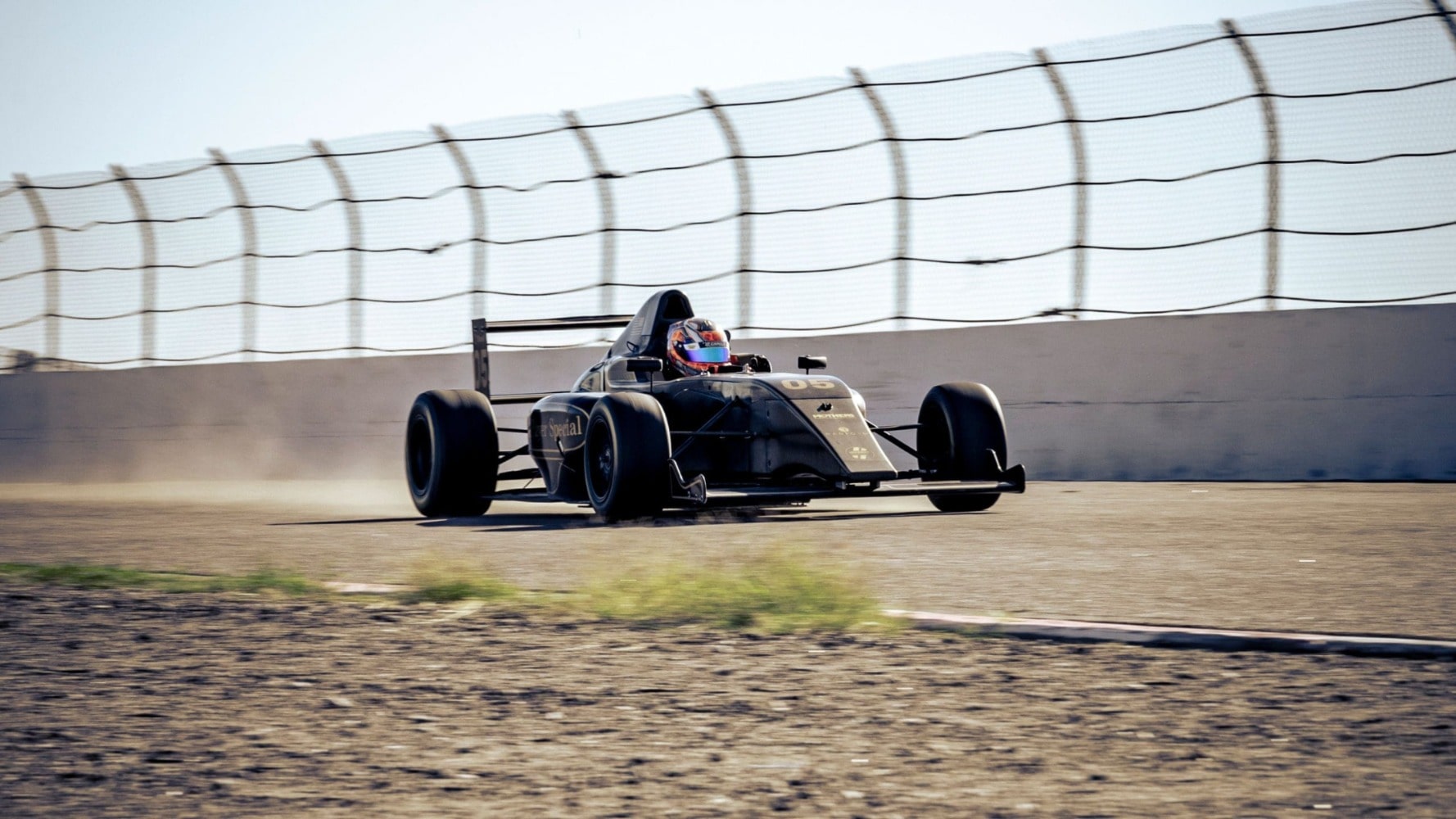
Most importantly, the Formula 4 car gave me a useful reference point for lightweight race-car behavior, slick tires, aerodynamic grip, sequential shifting, and the mental pace of a dedicated racing machine. It made every input feel more consequential. There was less mass, less isolation, and less time between a decision and the car’s response.
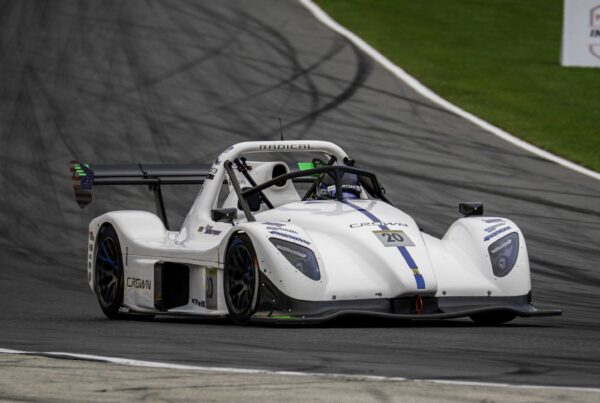
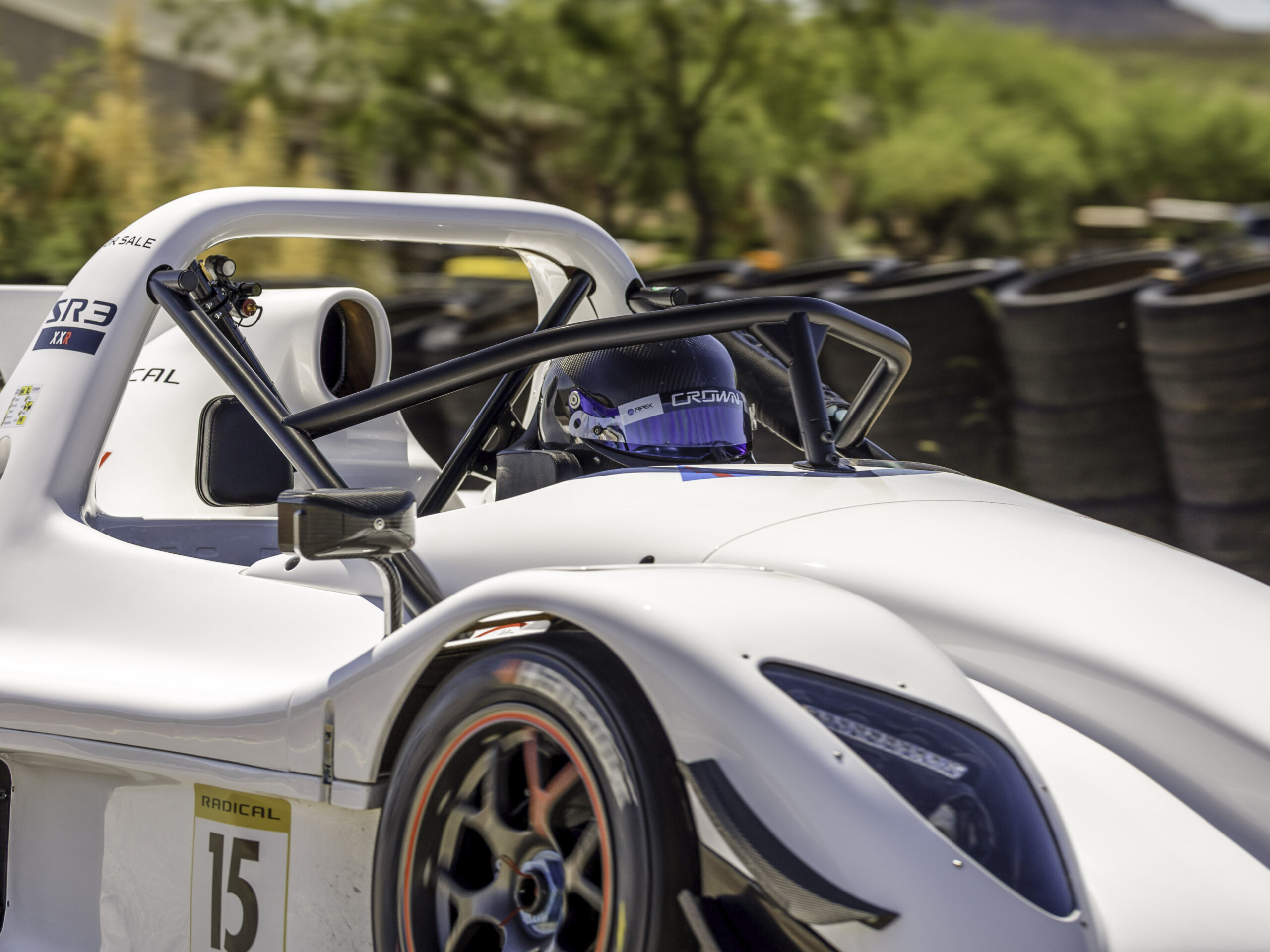
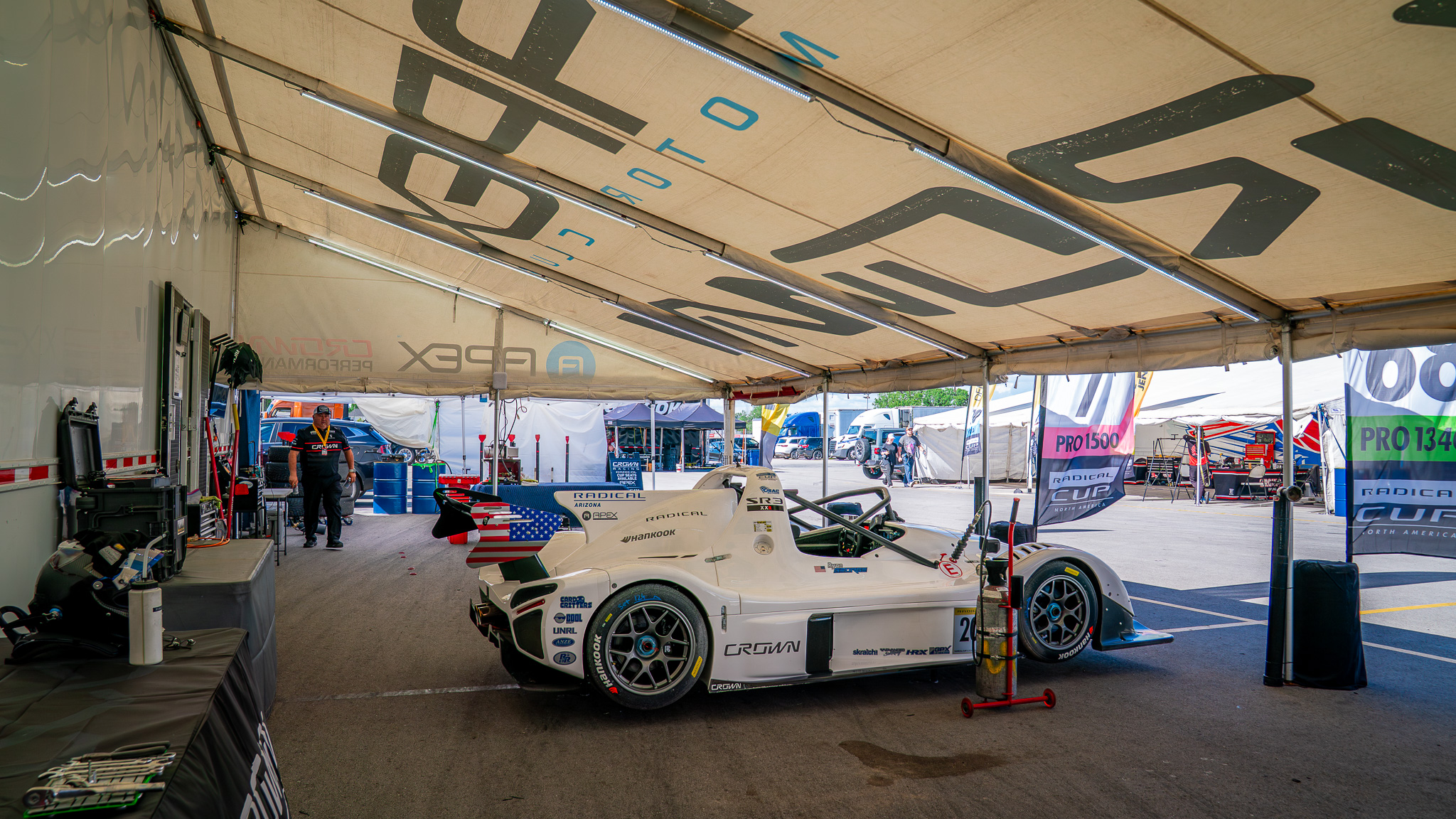
At the time, I was seriously considering a Radical SR3 XXR 1340. The Formula 4 experience did not make me want to change direction. It helped confirm that I was heading toward the right kind of car.
Why Racing School Confirmed the Radical Path
Ironically, the more time I spent around Formula-style machinery and racing schools, the more I appreciated the advantages of the Radical path. Formula cars are extraordinary learning tools, but my actual goal involved ownership, regular seat time, structured progression, support, and realistic opportunities to race frequently.
The Radical ecosystem made more sense for those goals. The SR3 offered the lightweight feel, slick tires, aerodynamic grip, sequential gearbox, and immediate responses that had appealed to me in Formula 4. It also offered a more practical ownership path supported by an established racing community, service resources, coaching, and events.
That conclusion fits the path I described earlier in Ladder to Le Mans. The point was never to copy a professional driver development ladder. It was to borrow the logic behind progression, then apply it to the realities of an adult driver who wants to own, learn, and compete.
It also changed how I evaluated the purchase itself. Instead of asking which car had the biggest number or the most dramatic specification, I could ask which platform would best reward the habits I was trying to build. That thinking eventually led me to a new SR3 XXR 1340, a decision I explain in Buying My First Radical: Why I Chose a New SR3 XXR 1340.
A Better Progression for an Adult Driver
The ideal sequence for someone like me increasingly looked like this:
- Build fundamentals in a GT racing school. Learn vision, braking, balance, smoothness, and awareness in a structured setting.
- Experience lightweight Formula-style machinery. Understand how quickly a dedicated race car responds and how aero, slick tires, and lower mass change the workload.
- Complete Radical HPDE orientation. Learn the specific procedures, controls, rhythm, and responsibilities that come with the SR3.
- Move into supported SR3 ownership. Pair the right car with preparation, maintenance, coaching, data review, and trackside support.
- Repeat the process at the track. Turn individual lessons into dependable habits through regular driving and honest debriefing.
That was not the fastest-looking path on paper. It was the path most closely aligned with adult life, ownership, operating cost, support, and repetition.
Repetition is ultimately how drivers improve. A heroic lap does not create a driver. Consistent laps, clear feedback, deliberate practice, and the willingness to return to weak areas do. The right first race car should make that cycle easier to sustain, not harder.
What Racing School Changed Before the Purchase
Racing school did not make me fast. It did something more important: it gave me a more accurate understanding of what competence requires.
I left with more respect for braking, more patience with vision, more awareness of how easily a driver can disturb the car, and a clearer sense of where I needed repetition. I also left with proof that my brain could adapt to the workload. The intimidating parts did not vanish, but they became specific skills to work on instead of one vague question about whether I belonged.
Going to racing school before buying a race car also improved the buying decision. I had enough context to understand why a lighter, momentum-focused platform made sense, why support mattered, and why the 1340 was a better learning tool for me than simply choosing more power.
Most of all, the experience helped me enter ownership with the right expectation. Buying the Radical was not graduation. It was the point where structured learning could continue in the car I intended to drive regularly.
Racing School Before Buying a Race Car: FAQ
Should I attend racing school before buying my first race car?
For an adult newcomer who wants to own and race a purpose-built car, formal instruction is the best first step. It builds core habits, reveals personal strengths and weak points, and gives you better context for choosing a suitable car and support program.
What did the GT racing school teach that HPDE alone might not?
The biggest benefit was a structured progression with immediate instructor feedback. Vision, braking, weight transfer, smoothness, vehicle balance, and situational awareness were taught as connected skills rather than discovered randomly over time.
Why take a Formula 4 intro course when the goal was a Radical SR3?
The Formula 4 course provided relevant exposure to lightweight race-car behavior, slick tires, aerodynamic grip, sequential shifting, and faster responses. Those characteristics made it a useful reference point while evaluating the Radical SR3.
Does racing school mean you are ready to race?
No. Racing school builds a foundation. Orientation, coaching, supported track days, data review, and repeated practice are still necessary before a driver can approach wheel-to-wheel racing responsibly.