

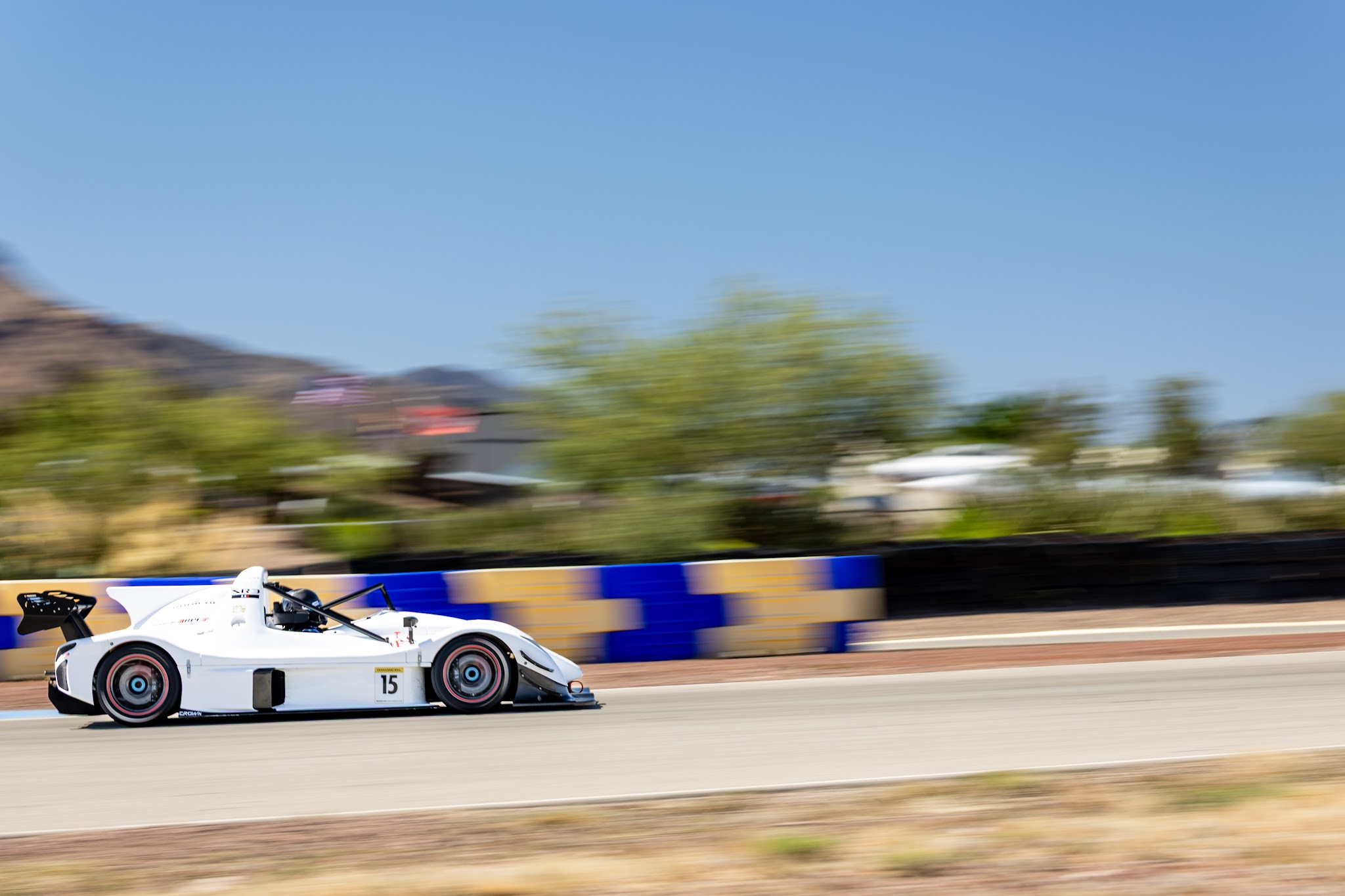
In the previous articles in this series, I explained why the Radical ladder appealed to me, how I approached buying gear without feeling like a poser, why I chose formal racing instruction before buying a race car, and ultimately why I purchased a new Radical SR3 XXR 1340.
Eventually, all of that preparation converged into one unavoidable moment: lining up on a starting grid with other cars around me.
Until that point, everything had existed in a relatively controlled environment. HPDE sessions are structured. Racing schools are supervised. Instructors intervene. Passing zones are managed. Mistakes happen in relatively predictable ways.
Wheel-to-wheel racing is different. There is no instructor in the passenger seat, no pause button, and no guaranteed clean lap to reset your brain. Cars move unpredictably. Drivers make mistakes. Closing speeds happen quickly. And underneath all of that stimulation, you still have to drive your own car properly.
That realization sat in the back of my mind for weeks leading up to my first race weekend at Inde Motorsports Ranch.
Arriving at Inde
Inde feels like a serious place the moment you arrive. The facility itself is beautiful, but there is also a subtle sense that people are there to drive properly. Cars are being prepped. Tire pressures are being checked. Drivers are reviewing data. Coaches are having detailed conversations about lines, braking zones, and traffic management.
It immediately felt less like “car culture” and more like motorsport.
That was both exciting and intimidating because I had never raced wheel-to-wheel before. Not once. Everything up to that point had been preparation for this moment, but preparation and execution are very different things emotionally.
Earning the Right to Race
Fortunately, Inde has a structured orientation and evaluation process before allowing new drivers into competition groups. That mattered enormously to me because, despite the nerves, I genuinely did not want to be reckless or overconfident. I wanted to earn the right to be there.
The evaluation process itself was surprisingly reassuring. It was not about raw speed. It was about predictability, awareness, consistency, line discipline, mirrors, point-bys, and demonstrating that I could operate safely around other cars.
That changed my mindset almost immediately. I stopped thinking, “I need to prove I’m fast,” and started thinking, “I need to prove I’m safe, composed, and capable of learning.” That distinction calmed me down significantly.
The Difference Support Makes
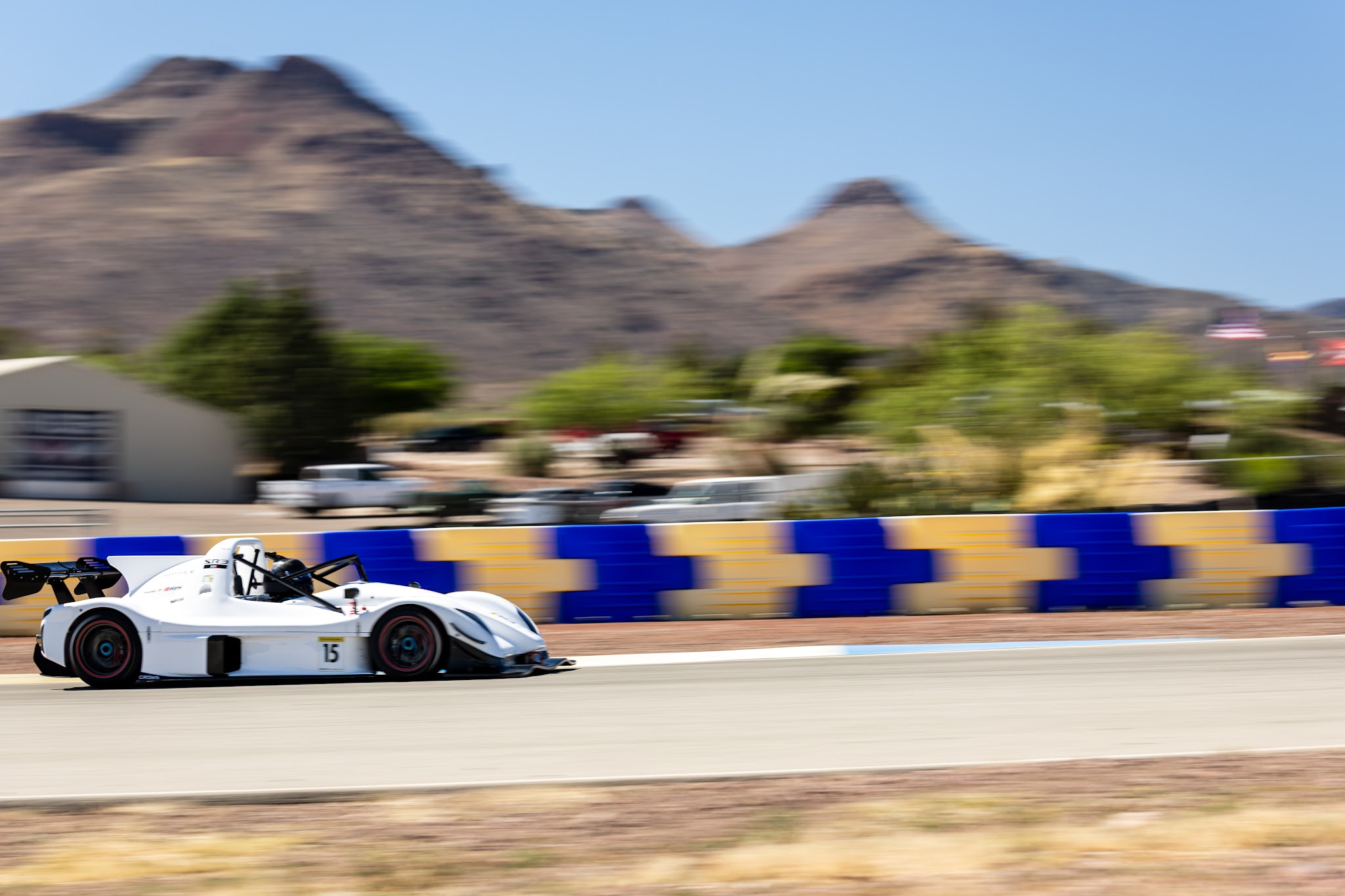
One thing became obvious almost immediately: having Crown there changed the entire experience. It was not just the car. It was the coaching, light engineering, logistics, preparation, and crew support around the car.
That support made everything easier, from the obvious things like checking tire pressures, fuel, belts, and systems, to the small things that matter more than you expect, like helping me get in and out of the car, managing belts and radio connections, and having a fan and umbrella ready while I sat in staging.
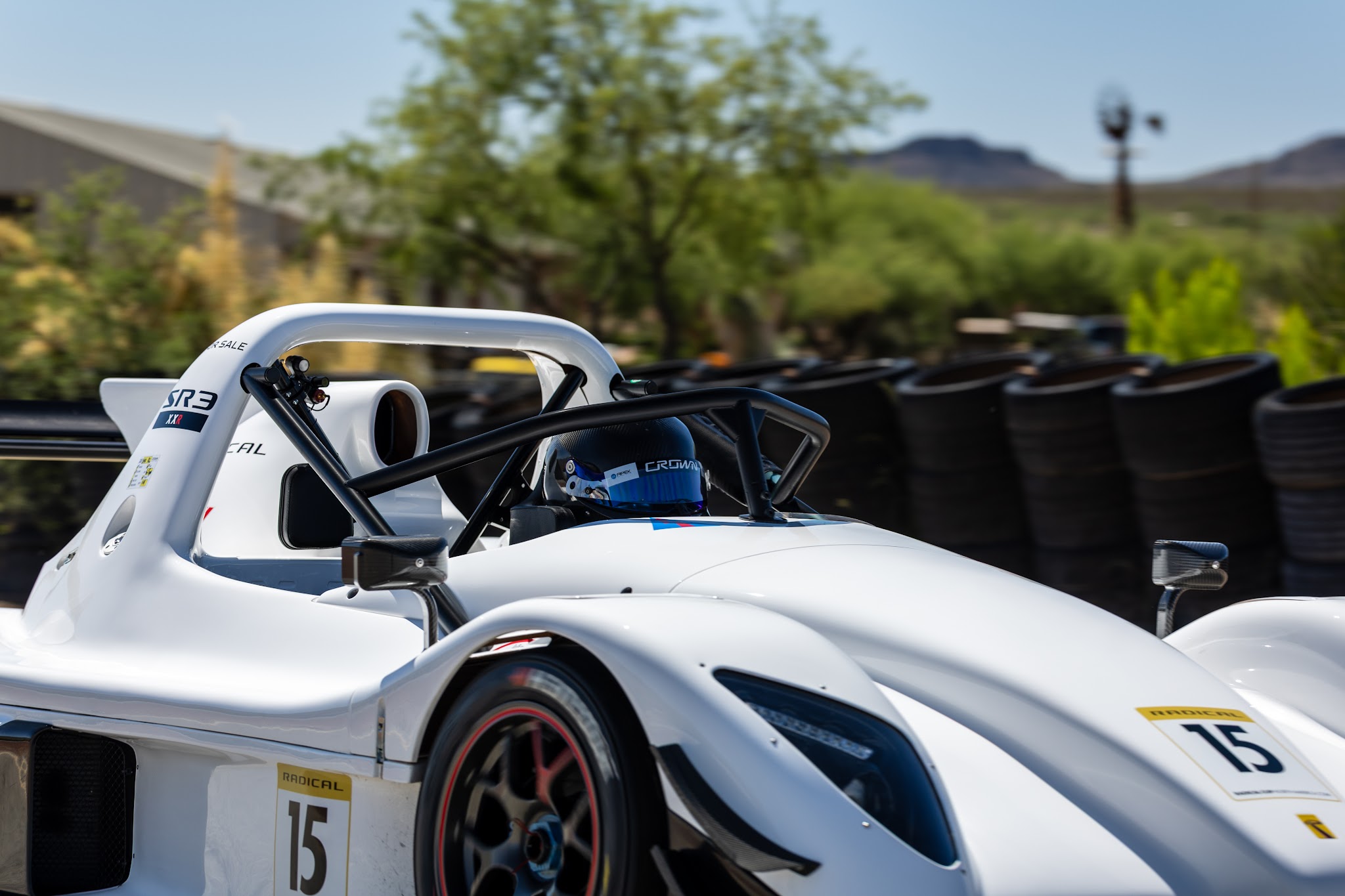
Those details may sound minor until you are strapped into a hot race car, wearing full gear, helmet on, HANS attached, waiting to go out while your heart rate is elevated and your brain is already trying to process the next session. At that moment, having a crew around you removes friction and preserves focus.
The same was true after every session. After each practice, qualifying run, and race, we reviewed data and video together. We looked at braking points, throttle application, corner minimums, traffic decisions, and where I was leaving time on the table. Instead of guessing what had happened, I could see it.
That made my progression much faster than it would have been on my own. It also made the weekend feel safer and more structured. I was still the one who had to drive the car, make decisions in traffic, and manage my nerves, but I was not trying to learn everything alone. Crown gave me the framework to improve session by session.
The First Green Flag
Nothing fully prepares you for your first race start. Even after schools, HPDE days, coaching, simulator work, and orientation laps, the sensory overload is difficult to describe. Cars are moving around you. Your peripheral vision is suddenly full of motion. Your brain starts processing closing speeds differently. Every braking zone feels compressed.
My dominant thought for the first several laps was simple: do not do something stupid.
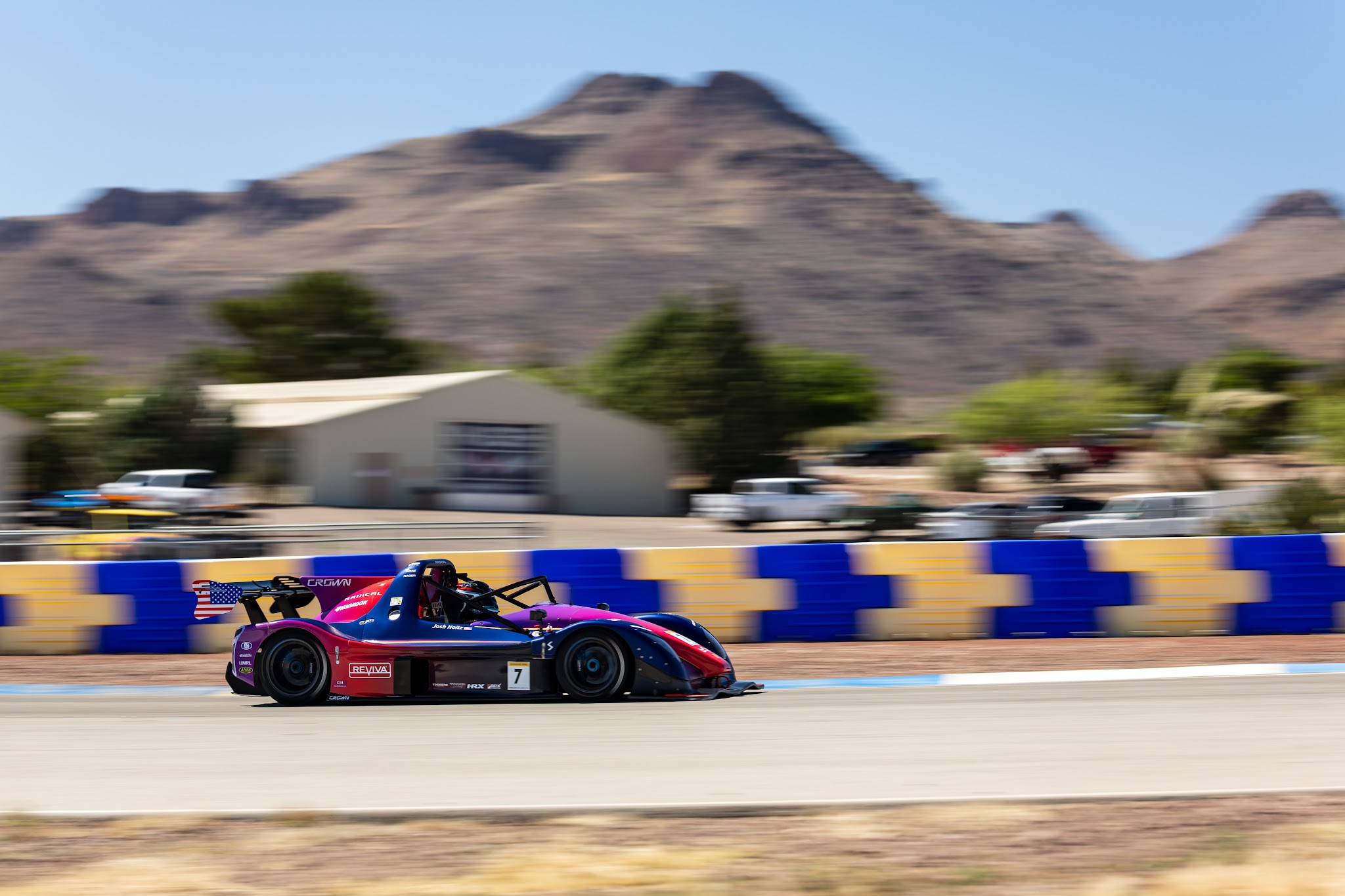
Interestingly, I was not scared of speed itself. By that point, the SR3 already felt familiar enough that the pace was manageable. What felt intimidating was the responsibility of sharing the track competitively with other drivers.
What Racing Actually Feels Like
Traffic changed everything. Running clean laps by yourself is one skill. Managing mirrors, positioning, defensive lines, overtakes, and spatial awareness at the same time is something entirely different.
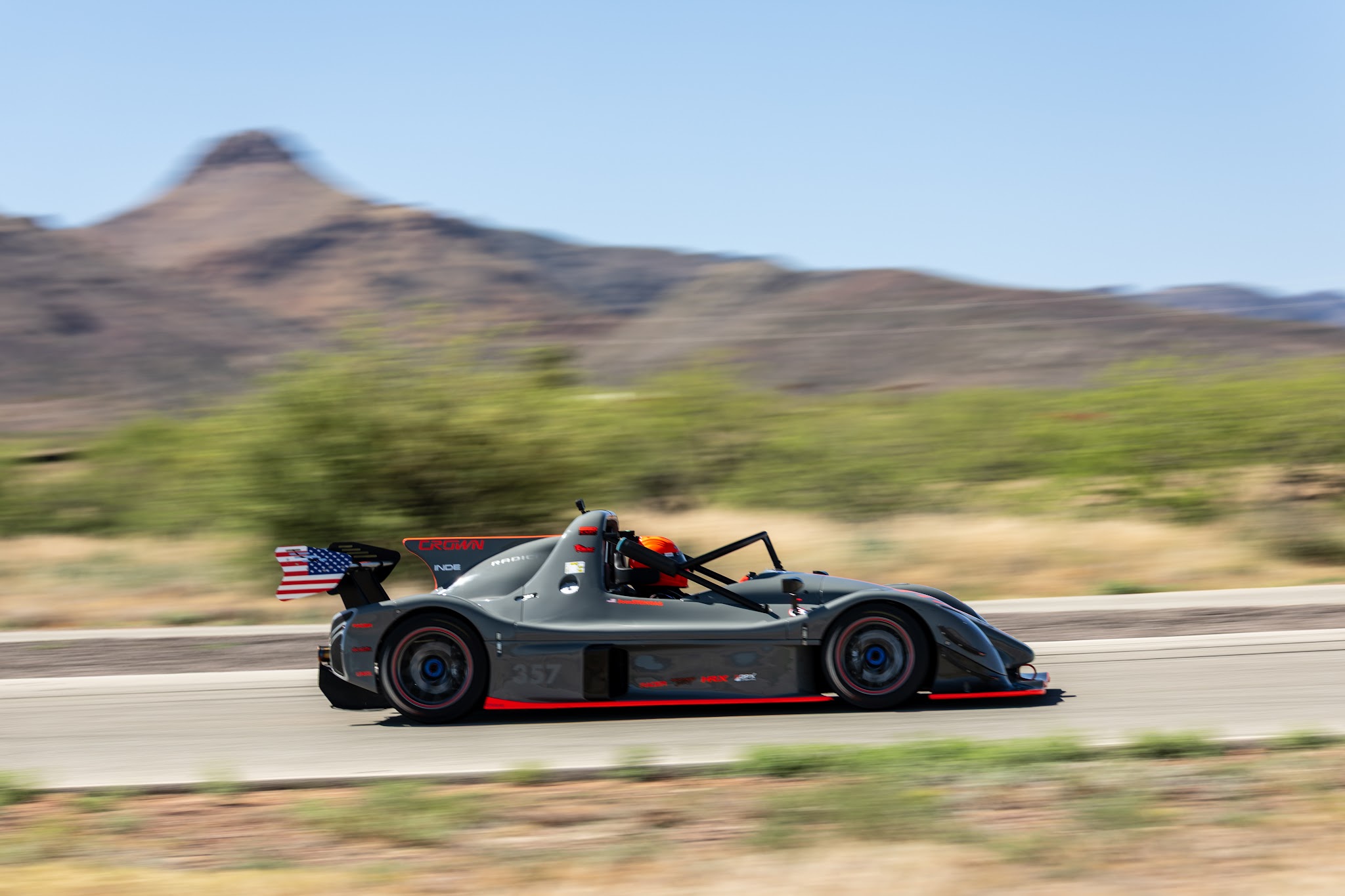
I made mistakes immediately. I braked too early in traffic. I hesitated on opportunities I probably should have taken. I occasionally became too focused on the car ahead instead of looking farther down track. At times, I drove reactively rather than proactively.
But something important began happening over the course of the weekend: I improved. Not dramatically. Not magically. But measurably. Each session felt slightly calmer than the one before. My inputs became smoother. My confidence under braking improved. Traffic became less mentally overwhelming. I started processing the flow of racing instead of merely surviving it. That progression became addictive.
One of the biggest surprises was how mentally consuming racing is. From the outside, people often imagine racing as aggression and adrenaline. In reality, good driving feels much more like concentration and rhythm. The fast drivers looked almost calm.
That was eye-opening. The better drivers were rarely the most dramatic. They were the most consistent, the smoothest, and the least surprised by changing situations. They wasted very little mental energy.
Because we were already reviewing data and video after every session, improvement stopped feeling abstract. Tiny mistakes that felt invisible in the car became obvious afterward. That feedback loop made the weekend feel less like a guessing game and more like a structured learning process.
Perhaps most importantly, the environment around Radical racing turned out to be exactly what I hoped it would be: competitive, but collaborative. Drivers shared advice. Coaches helped newer participants. People wanted clean racing. There was seriousness without unnecessary ego. For someone entering motorsport later in life, that culture mattered.
The Results
By the end of the weekend, I was nowhere near the fastest driver there, but I was far more competitive than I expected to be. On Inde’s short south-loop configuration, I finished 3rd out of 5 cars. On the faster full-course configuration, I finished 5th out of 6.
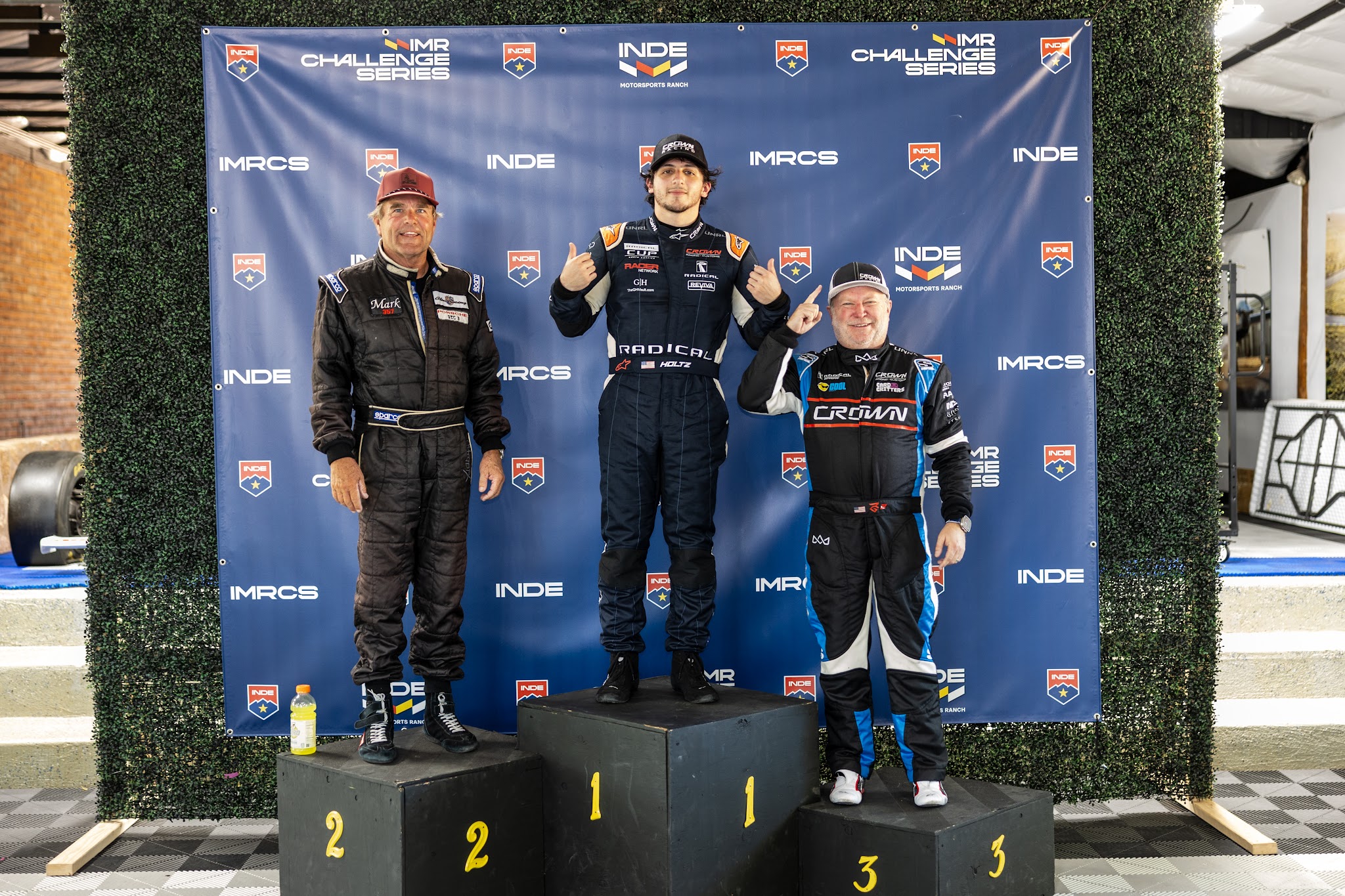
Those are not headline-worthy results in any professional sense, nor should they be portrayed that way. But for someone with effectively zero prior wheel-to-wheel racing experience, they represented something meaningful to me: progress.
More importantly, I left the weekend feeling like I belonged there. Not because I was exceptionally fast, but because I had approached the process seriously, safely, and with enough humility to keep learning. That feeling mattered more than trophies.
What I Learned
The biggest lesson from my first race weekend was surprisingly simple: racing is far less about bravery than I originally imagined.
It is about process. Preparation. Repetition. Situational awareness. Emotional control. Mechanical sympathy. Gradual confidence-building. Respect for the machinery and the people around you.
The intimidation never fully disappears. You simply become more capable of functioning despite it.
In many ways, that realization mirrors the entire theme of this series. You do not need to be a teenage prodigy to enter motorsport meaningfully. You do not need to pretend you are becoming a factory driver. You do not need to skip directly to the fastest car available. You just need structure, support, progression, and the willingness to learn honestly.
Ironically, that may be the most enjoyable path of all.
First Race Weekend FAQ
Do you need a competition license to race at Inde Motorsports Ranch?
Inde runs a structured orientation and evaluation process before new drivers are allowed into competition groups. The evaluation focuses on predictability, awareness, consistency, line discipline, mirror use, and clean point-bys rather than on lap time.
How is wheel-to-wheel racing different from HPDE?
HPDE sessions are structured and supervised, with managed passing zones and an instructor available. In wheel-to-wheel racing there is no instructor in the car, cars move unpredictably, closing speeds happen quickly, and the driver has to manage traffic while still driving the car properly.
What does trackside support actually do for a first-time racer?
Beyond car preparation such as tire pressures, fuel, belts, and systems checks, crew support covers getting in and out of the car, belts and radio connections, staging comfort, and structured data and video review after every session so improvement is measured rather than guessed at.
Is a Radical SR3 XXR 1340 a realistic car for a first race weekend?
With formal instruction, HPDE orientation days, and proper trackside support beforehand, the SR3 XXR 1340 gave enough familiarity that pace was manageable. The harder adjustment was sharing the track competitively with other drivers rather than the speed of the car itself.


